Biomass boiler information request
Pollutants associated with biomass combustion include particulate matter (PM10/PM2.5) and nitrogen oxide (NOx) emissions. These pollution emissions can have an impact on local air quality and affect human health. It is therefore essential that any new biomass boilers installed in the district meet certain emission control requirements and that numbers are monitored in order to protect local air quality.
In order to approve a planning application associated with a biomass boiler, details must be supplied to the local authority. The operation of a biomass boiler may also require regulation under the Clean Air Act 1993, the Environmental Permitting Regulations (EPR) or the Waste Incineration Directive (WID), depending on the type of biomass fuel and the size of the boiler.
Our Biomass Boiler Information Request form should be submitted to prior to any installation of a biomass boiler. It can also be used to notify us of existing biomass boilers.
Wood burning in the home
Many homes in East Suffolk have open fires or wood-burning stoves, however people may not be aware that these can contribute to air pollution and reduce indoor air quality, which can be damaging to health.
Open fires and wood-burning stoves have risen in popularity in recent years and may be an additional form of heating, an attractive feature or the sole heat source. Some people are unaware that use in the home increases your own exposure to air pollutants and adds to our national emissions of particulates.
Long-term exposure to air pollution, over many years, reduces life expectancy, mainly due to cardiovascular and respiratory diseases, strokes and lung cancer. And even short-term exposure, over hours or days, can impact on lung function, worsening asthma, and increasing respiratory and cardiovascular hospital admissions.
We know many residents use open fires or wood-burning stoves as their main source of heating and that others enjoy the ambience of having an open fire at home. However, making a few small changes can make a huge difference in terms of the efficiency of your fire and the effect on the air quality in your home. Improving air quality, both indoors and outside, will have a positive impact on the environment, your health and the health of your family.
To help reduce emissions, both indoors and into the environment, there are simple steps which homeowners can take:
Consider burning less – many people use an open fire or wood-burning stove in addition to their normal heating. If your house is already warm, then consider not lighting the fire, which will reduce both costs and airborne particulates.
Only burn dry (seasoned) wood - burning wet or unseasoned/green wood is inefficient as it takes a lot of heat to boil off the water before the appliance can give out heat into the room. In turn, this creates a lot of smoke, tar and particulates which can damage your chimney and appliance and contributes to air pollution.
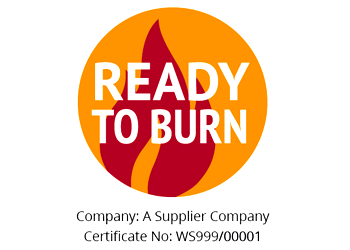
Buy ‘Ready to Burn’ fuel – look for wood marked as ‘Ready to Burn’ sold by a Woodsure Certified Supplier. Wood displaying the Ready to Burn logo has a 20% moisture content or less and can be burnt straight away. See below for further information. These logs burn more efficiently than unseasoned/green wood and reduce environmental impact. More information on the Ready to Burn Scheme.
Do not burn treated waste wood (e.g. old furniture or pallets) or household rubbish – wood which has been treated with paint or preservatives can emit harmful fumes, and household rubbish may include plastics that can release toxic pollutants, such as arsenic, into your home when burnt and may affect your health.
Consider using an approved smokeless fuel – List of approved smokeless fuels
If you are buying a new stove - check it is Defra approved and have it installed by a qualified person.
Check how to operate your appliance efficiently - always operate your stove in line with the manufacturer’s guidance. By controlling the air supply correctly, you will improve efficiency, saving you money and reducing emissions.
Regularly maintain and service your stove – servicing your stove annually means it will work better and will generate more heat from what you burn.
Get your chimney swept regularly (up to twice a year) - during use, particulates build up in the chimney reducing the efficiency and increasing the risk of chimney fires. It is better to use a qualified chimney sweep who will also be able to advise you on good burning practices for your open fire or stove.
Make sure you are using the correct fuel for your stove and flue – some stoves are specific to the type of fuel to be burnt. Some are wood only and others are multi-fuel. Burning the wrong fuel could damage your equipment or flue, which will not be covered by home insurance.
Regulations governing the sale of solid fuels
The Department for Environment, Food and Rural Affairs (Defra) has put in place the ‘Ready to Burn’ Scheme - an initiative to help homeowners look after their wood burning equipment and improve air quality.
The regulations state that wood sold in quantities under 2m3 is required to be;
- certified to show that the moisture content is 20% or less
- labelled with the ‘Ready to Burn’ logo, along with the name of the person who obtained the certificate and the number of the certificate issued.
Woodsure Ltd. Is the Defra appointed certification body who administer the Ready to Burn Scheme and there are a number of certified wood fuel suppliers within East Suffolk. Find a local supplier.
Regulations also state that:
- Wood sold in volumes over 2m3 needs to be sold with guidance on drying and advice on the issues of burning wet wood.
- Manufactured Solid Fuels need to be certified to confirm that they have a sulphur content below 2% and do not emit more than 5g of smoke per hour.
- Bags of traditional house (bituminous) coal are no longer available for sale, and sales of loose coal via approved coal merchants will be phased out by May 2023.
We are working with Suffolk County Council Trading Standards - the body enforcing the Regulations. Trading Standards have advised that businesses and members of the public can contact them if they require advice regarding the sale of domestic fuel and wood used for burning. Trading Standards can be contacted via their reporting website using the online enquiry form or by calling 0808 223 1133.