East Suffolk Council is seeking to commit almost £107million across the next four years towards the delivery of key projects and schemes that improve and enhance local communities.
On Tuesday 13 January, Cabinet members approved a General Fund Capital Programme, financed with internal and external resources, as part of the annual Budget-setting process, with a total financing requirement of £106.87m for the period 2025/26 to 2029/30. These proposals will now move to the next stage ahead of presentation to Full Council in February.
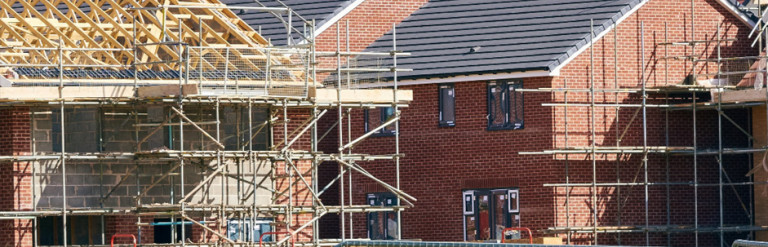
The programme includes Government funding for the transformation of brownfield land at Lowestoft’s former Sanyo factory site into much needed future housing, increased investment into improving play equipment and play areas across the district, and funding towards the planned regeneration of Leiston Market Square.
Cllr Vince Langdon-Morris, cabinet member with responsibility for Resources and Value for Money, said:
“This comprehensive Capital Programme is designed to deliver lasting benefits for residents, businesses and visitors to East Suffolk by investing in our communities, improving public spaces and creating new opportunities.
“It benefits from various sources of funding, including the Government’s Towns Fund and Levelling Up Fund, and is based on this Council’s key ambitions and its four main principles of Environmental Impact, Sustainable Housing, Tackling Inequalities and Thriving Economy.”
Meanwhile, a total budget requirement of £84.14m, also financed through internal and external resources, has been approved for the Housing Revenue Account (HRA) Capital Programme from 2025/26 to 2029/30 to support affordable housing development, improvements, upgrades and adaptations.
Cabinet members also approved a draft five-year Medium Term Financial Strategy (MTFS) for delivering critical day-to-day services such as support for communities, environmental services, leisure, waste collection, planning and parking, within its General Fund.
As well as supporting the delivery of the Council’s commitment to net Zero by 2030, the MTFS provides for a three-year extension of the Youth Employment Service (YES) for young people not in education, employment or training, and supports the production of a new Local Plan for the development of new homes, employment land and infrastructure up until at least 2044.
Also part of the Council’s annual Budget setting process, our strategy aims to ensure the provision of the highest quality services possible, within the resources available and driven by the principles set out in the overarching vision for East Suffolk – Our Direction 2028. Net revenue budgets allocated over the five-year MTFS supporting Our Direction themes include: £26.2m for Tackling Inequalities, £102.5m for Environmental Impact, £25.6m for Sustainable Housing and £36.2m for Thriving Economy.
Council Tax is one of the most important and stable income streams, funding approximately 35% of our net budget requirement for 2026/27. The draft Budget includes a proposal to increase East Suffolk Council Tax for 2026/27 by 2.95%. East Suffolk Council receives around 10% of each monthly Council Tax payment. The remaining balance goes to the County Council, Police, and Town and Parish Councils.
Council fees and charges, covering areas such as parking services, beach huts, garden waste collection, licensing and planning applications, equates to around 20% of the total income and remains an important source of funds.
The introduction of the 100% Council Tax premium on second homes is estimated to generate an additional annual income in the region of £700,000. These funds support the Council’s response to the negative social and economic impacts, and ongoing market distortions, of widespread second home ownership in the local housing market.
The Budget reports the position for East Suffolk in the lead up to local government reorganisation (LGR) in 2028/29 – with any updates to be included in future budget reports.
Cllr Langdon-Morris said:
“Our services can make a real difference to the lives of people in East Suffolk, and the delivery of day-to-day functions always remains an unwavering priority.
“We are proposing a balanced budget for 2026/27 that protects core services while considering significant ongoing cost pressures from pay, inflation and service demand.
“While we must consider the implications of LGR and make decisions that allow for a smooth transition, our priority is to ensure that this Council continues to deliver effectively.
“While we await the final details of the Government’s funding settlement for local authorities, it will require an increase in the amount of Council Tax paid by residents. The assumption in the Government's Fair Funding Review is that authorities raise Council Tax up to the maximum permitted by the referendum threshold of 3% for shire district councils.
“The proposed increase in annual Council Tax (based on a Band D property) by East Suffolk Council equates to £5.67 per household for the entire year, helping to fund the services that matter most to our communities.”
The Government’s new multi-year funding settlement to Councils for 2026/27 to 2028/29 is the first in a decade. This settlement introduces major changes to the funding calculation, including a stronger link to deprivation, abolition of the New Homes Bonus, and consolidation of smaller Government grants into one main settlement. To manage this, East Suffolk will receive transitional funding protection, but at a reduced level compared to most councils.
The Council’s Overview and Scrutiny Committee will examine the General Fund Capital Programme at its meeting on 29 January and communicate any recommendations back to ESC Cabinet at its meeting on 3 February. It will also review Budget proposals before the final budget for 2026/27 is presented to Cabinet on 3 February and Full Council on 25 February.